Welcome to Our Orthopedic Clinic in Pakistan!
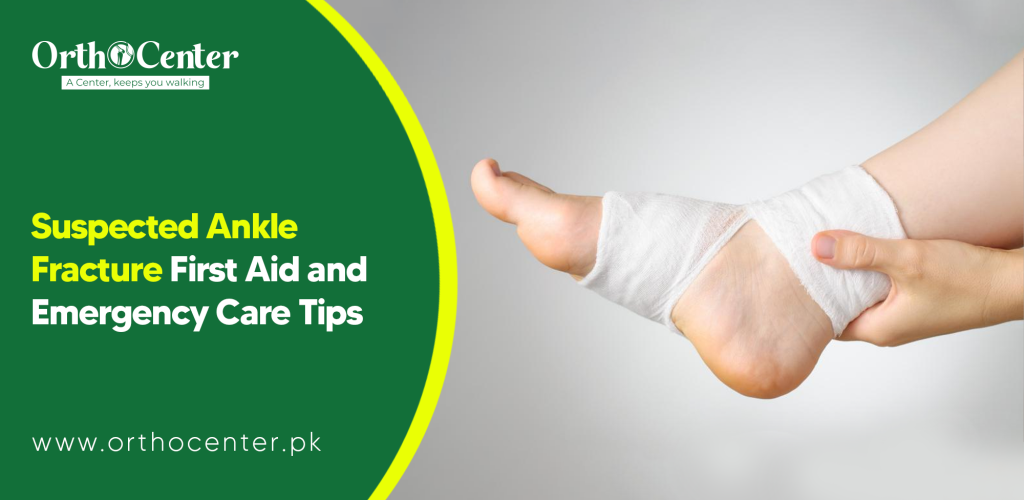
Ankle injuries are often unexpected. They likely happen during a wrong climbing step, sudden twisting of a muscle or joint, sudden slip, fall from a height, or traumatic accident. Not every ankle injury is a fracture. It is one of the emergencies that can turn out to be a serious complication if it doesn’t get initial management. In such cases, a simple list of first aid and emergency care tips, as a first-line treatment, can be greatly helpful to deal with any casualty with a suspected ankle fracture. There can be one or more bone fractures or a dislocation that can be identified with symptoms.
The professionally guided steps could help in managing this critical situation. During a presumed ankle fracture, first aid works by stabilising the pain and injury at the affected area until the proper medical help arrives. However, the responder’s expertise also matters a lot. At the Orthocenter, specialists like Dr Ahmed Shoaib give advanced orthopaedic services. He has great expertise in treating damaged or broken ankles and provides latest treatment options for better outcomes. This article showcases the necessary first treatment and emergency care tips for managing suspected ankle fractures by considering certain guidelines to prevent any further damage.
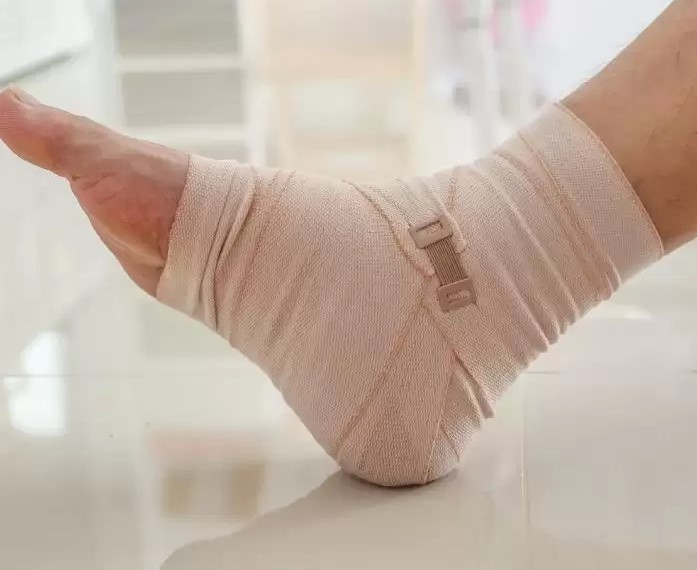
Ankle joints are incomplete without three more bone attachments, including the tibia, fibula, and talus. Any strong external pressure or force can crack these bones. More likely in cases such as direct trauma, vehicle collision, or sports injury.
However, if the bones are weak in strength (in the case of osteoporosis or osteogenesis), then a minor crack can also cause a huge fracture. This damage can range from a slight hairline crack to a complete break of the bone or even a dislocation.
There are two major types of bone fractures.
Most ankle injuries are related to stress fractures, either by strain(tendons and muscles tearing) or sprain(bone and ligaments stretching). However, whatever the type, all need accurate treatment at the end for proper recovery.
The typical signs and symptoms include the following:
First aid works as a controlling method, not a treatment method. If there is incorrect handling, a small injury can lead to bigger damage and worsen the situation, causing joint problems. It aims to manage the situation of the injured area by following certain tips to give initial support for the casualty.
Meet Dr Ahmed Shoaib for safe healing, mobility restoration, and ankle joint stability.
The following are the tips that can help in safely managing the injured site.
Although it is a panic situation, staying calm and composed can keep the injured still. It prevents the danger of shifting any fractured fragments.
It needs to align the limb with the help of well-padded splints. These are the essential parts of first aid for fractures, used to make sure that broken bones do not collide and prevent damage to the nearby nerve tissues, blood vessels, and vital organs. It also reduces the chance of fractured displacement.
Ice works as cold compression. It can be applied in the form of cubes, or a cold pack wrapped in a cotton or soft towel and works as a perfect element to reduce swelling in this case. Repeat it after 1 hour initially, then after every 4 hours in a day.
The purpose of making the leg elevation is to slow down blood pooling and reduce swelling and pain. For this purpose, use pillows or blankets to raise the leg above the level of the heart.
As it strains the suffering bone, there should not be any kind of weight-bearing activity, including walking and standing, on the suspected angle fracture. Take help or support in the form of a wheelchair, a stick, or personal support.
Open fractures result in more bleeding. You need to stop it. For this purpose, use a clean cloth or bandaging material. The wound can have visible bone fragments. So, don’t touch or move them. Clean or remove any visible contamination with sterilized water. Also, simply pat the area dry and press gently over the wound. Then cover it with a clean cotton gauze or cloth.
It is important to check the blood flow. Keep the toes open while covering them with splinters. Open toes give discolouration signs when improper circulation occurs. It includes numbness, cold feet, and toes turning pale or blue. If any of these signs appear in a pair, then loosen the sling and try to get medical help immediately.
The diagnosis assessment involves physical examination of the injured ankle area. An orthopaedic specialist also conducts the X-ray of the ankle (AP) joint from both angles, anterior or posterior. This X-ray gives the actual view of the joint to clearly see and check out the real damage. According to the results of physical examination and tests, treatment is possible in two ways.
The non-surgical treatment approach involves medications and the use of alignment tools. It is often a splint for the leg or ankle that acts as a hard, elongated, but comfortable support for displaced, injured ankles to limit further movement.
The surgical treatment approach is more often used for treating unstable fractures and severe dislocations of ankle joints. One of the alignment procedures involves the use of tools made up of metal, wood, or screw rods to align the bone. But for replacement surgery, it uses prostheses made of high-quality metal, plastic, or ceramic material. However, surgery gives better and more predictable results.
Accidents are part of life and can happen anytime, but taking care of your ankles can lower your chances of breaking them. It includes
Also, balance exercises can help stabilise the ankle, which makes it better able to handle sudden twists or pressure.
Finally, taking preventive measures can be lifesaving for managing a suspected ankle fracture. The correct first aid considerations can protect the ankle from further harm before the right help arrives. First aid is important for protecting bones and the surrounding vital structures. It works on a stabilising approach and can never be a replacement for medical treatment.
There is still a critical need to evaluate the fracture severity, causes, and type for effective treatment. For this purpose, the patient needs to get a proper diagnosis and treatment from a specialist right after the first aid. Dr Ahmed Shoaib is an orthopaedic consultant who has been successfully treating many patients dealing with ankle fracture problems. The provision of advanced treatments and compassionate care is his core speciality. Every individual needs to take care of their joints through an appropriate diet and exercise. But in case of injury you must approach the right surgeon to receive the care you deserve.
WhatsApp Us
