Welcome to Our Orthopedic Clinic in Pakistan!
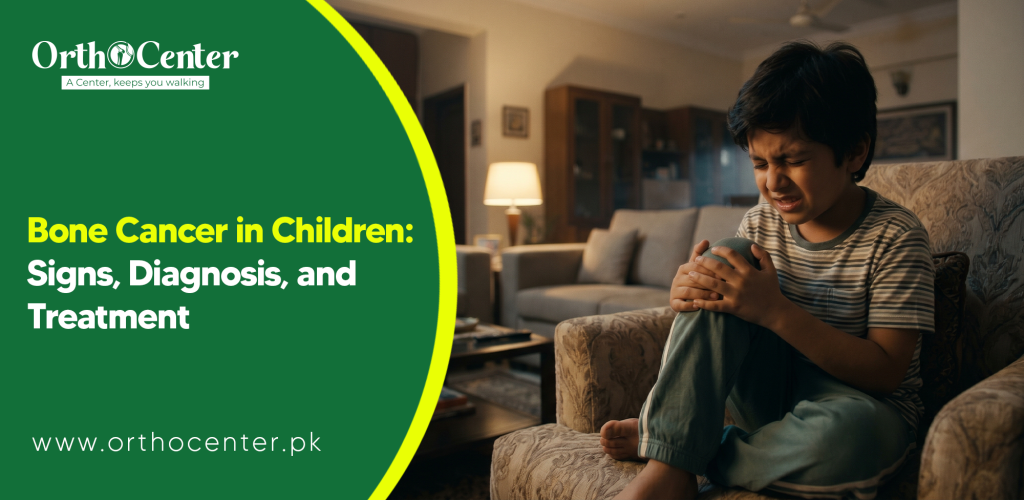
Everyone will agree that seeing your child suffering from pain is more hurtful than bearing it on your own. It becomes even more worrisome if the child continues to experience discomfort despite having rest, medicine, or other strategies. Not always, but it could be an indication of a serious medical condition. The occurrence of bone cancer is frequent in such a scenario.
Bone cancers come in a category of rarely appearing conditions; however, their effects can be very serious for the patient and the entire family as well. Bone cancer often does not cause specific symptoms in its early stages, which is why many people mistake it for sports injuries, muscle strain, or growing pains.
As a result, the condition may go undiagnosed for an extended period, delaying the identification and treatment of the underlying problem. However, due to the progress of medicine, bone cancer treatment has improved significantly.
With knowledge of warning signs, tests and treatments available, parents will be in a better position to ensure early diagnosis and treatment of bone cancer in children.
The availability of compassionate orthopedic experts like Dr. Ahmed Shoaib is no less than a blessing. His patients receive full evaluation, proper planning of treatment, and ultimately advanced and safer techniques. This blog aims to deliver more on bone tumors in children, along with details of symptoms and treatment choices.
Childhood marks a phase of overall growth of the body. Definitely, bones also undergo this process. For any reason, if the growth of abnormal cells inside the bones gets uncontrolled, it creates a tumor. Cancer can take birth in the bone itself or may develop in other sites of the body, traveling to bones through the bloodstream. The primary bone cancer is the one that starts from the bone tissue itself and is relatively rare.
The two main types that often attack young people are
Osteosarcomas tend to develop in the ends of bones near the joints, particularly those bones found close to the knee or upper arm. It is quite common in rapidly growing teens. On the other hand, Ewing sarcoma can occur in the pelvis, ribs, and long bones.
The disease is quite common in individuals who are a bit younger than osteosarcoma patients. The precise causes of osteosarcomas and Ewing sarcomas remain unclear, but experts suggest that inherited changes in bone tissue genes could result in cancer. Some lifestyle factors may also trigger it. Yet, the concrete causes are secret till now.
Being Full of Life Is To Move Freely: Visit Orthocenter For Expert Joint Replacement
Meet Dr. Ahmed Shoaib To Bring Back Comfort In Every Step
The main issue that diverts the attention of parents is the similarity of symptoms among bone cancer, sports injury, growth pain and nutrient deficiency. It may prevent the diagnosis of the condition and make it complicated.
However, there are certain symptoms that should not be ignored, as they may represent the warning signs of bone cancer and indicate the presence of a serious underlying medical condition.
The first symptom is ongoing pain in the bone or a joint. At first, the pain might seem mild and at random times. However, the one becoming stronger over time with an increase in frequency is a matter of attention. Eventually, it starts to worsen in the evenings or after physical activity.
Over time, if it’s a tumor, it grows. In consequence, the area may start swelling, or a lump may develop there. It may be accompanied by warmth, tenderness, or hardness in the bone area.
The tumor may develop in any limb. If it is the leg, a child may start limping and avoiding bearing any weight on the affected leg. If it is an arm, lifting items could be a problem.
The tumor can make bones brittle and prone to breaks due to even minimal trauma. This type of fracture is called pathological.
Some symptoms are general. These could appear solely or all at once. These are
However, it is more common with later stages of bone cancer development.
Identifying bone cancer requires a series of clinical tests. Here is a detail
Usually, accomplished experts conduct an interview about the patient’s symptoms, pain intensity, family history, and possible injuries. Further, a physical examination shows whether there is any swelling, tenderness, joint movement, or neurological impairment.
Even though blood tests do not diagnose bone cancer, they can be used for general health assessment and detection of high enzyme levels or infections and other diseases.
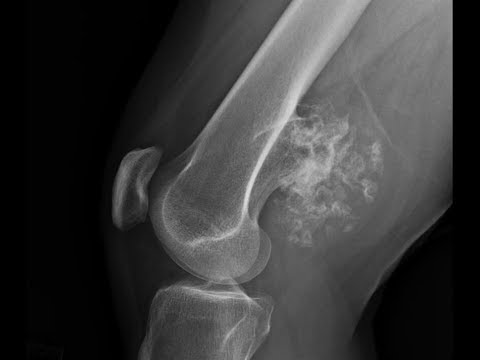
Usually, an X-ray test is taken first, which can indicate abnormal bone destruction or unusual bone development.
Further imaging tests, if any irregularities occur, can be done using an MRI. It will provide more details about the tumor size and its involvement in the muscles, blood vessels, and nerves. The CT and PET scan will check the spreading of cancer to other organs, especially the lungs. A bone scan helps find other places where there might be any other abnormal bone develo
In order to diagnose this condition, a biopsy is a must in almost all cases. It involves taking a sample of tissue from the affected area to be analyzed under a microscope by a pathologist. This will not only help determine that there is cancer present but will also specify the kind of cancer and the grade, hence helping making right decisions about treatment.
After diagnosing bone cancer, doctors must know at what stage of the cancer the patient is. Localized cancer stays within the bones. Conversely, metastatic cancer is the one that has already spread to other parts of the body, such as the lungs. This information is foundational to deciding upon the course of action for the treatment.
This treatment method involves the use of drugs that kill fast-growing cancerous cells. The medication can be delivered prior to surgery to reduce tumor size or after surgery to destroy any residual disease. A child will be given chemotherapy in intervals to allow the body to recuperate during treatment.
Its common side effects are:
However, some medications can alleviate such side effects.
Through surgery, the surgeon’s target is to remove the tumor from the body. Wherever possible, surgeons employ limb-sparing surgeries. It means they surgically remove the tumor without having to amputate the affected limb. Metal implants, bone grafts, or expandable prostheses can be employed in the rebuilding of the removed bones.
In rare situations, amputation may be considered. It is when the tumor infiltrates critical structures, for which surgery is not possible.
It is a procedure that uses high doses of energy to kill cancerous cells. Radiation is highly effective in treating Ewing sarcoma since cancerous cells usually respond positively to radiation. In cases of osteosarcoma, radiation is used occasionally whenever it is difficult to remove the tumors surgically from the bone.
Research into advanced bone cancer treatment continues to explore targeted therapies and immunotherapy that specifically attack cancer cells while minimizing damage to healthy tissue.
Although these treatments are not yet widely used for pediatric bone cancer, they show promising potential for improving outcomes and expanding future treatment options.
In summary, although rare, bone cancer in children needs to be recognized promptly and treated by specialist professionals. Bone pain, swelling, limping, or repeated bone fractures should never be passed off as simple growing pains until properly checked. Timely detection enables earlier commencement of treatment when the cancer is less developed, ensuring greater chances of survival.
Today’s treatment of bone cancer involves chemotherapy, surgical procedures, radiotherapy, as well as rehabilitation that is individually designed for each child. In this context, the dedicated services of orthopedic specialists like Dr Ahmed Shoaib are noteworthy.
Under his direction, medical centers like Orthocenter are efficiently giving their input to help people overcome the threats of diseases like cancer. The progress made by specialists in treating children with bone cancer means that many of those diagnosed today can go on to lead healthy and fulfilling lives.
WhatsApp Us
