Welcome to Our Orthopedic Clinic in Pakistan!
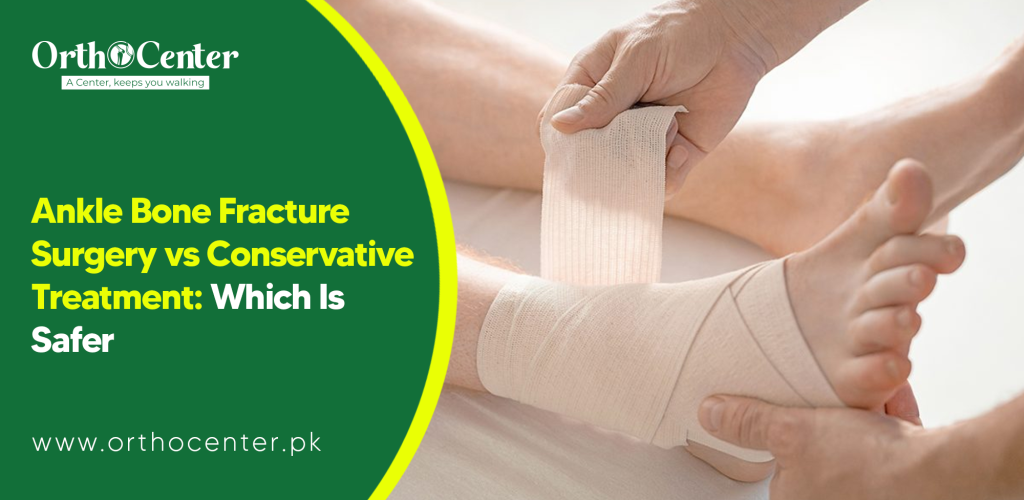
Fracture of the ankle bone is a common mishap that can happen to anyone, an office-going person while climbing the stairs, a sportsman while playing, a person dancing, or just walking. The fracture can happen suddenly, and it immediately narrows the world. After an ankle bone fracture, severe pain and difficulty in walking often lead patients to consider ankle bone fracture surgery as the next step. Patients want to return to their routine as quickly as possible and find relief from pain.
The treatment of an ankle fracture is a cast, but it might also require surgery. Patients do not prefer surgery because of the long healing time and the scars that may stay forever. Some patients seem confused about the success of the cast and other non-surgical treatments.
The truth is simple: both treatments can be safe and effective when used appropriately. Dr. Ahmed Shoaib at Orthocenter always prioritizes his patients’ needs and safety. This is why he ensures the provision of the right treatment at its best to benefit all of his visitors. This article is about comparing ankle fracture surgery vs conservative treatments to let the readers fully comprehend all aspects and make an informed decision about their joint health.
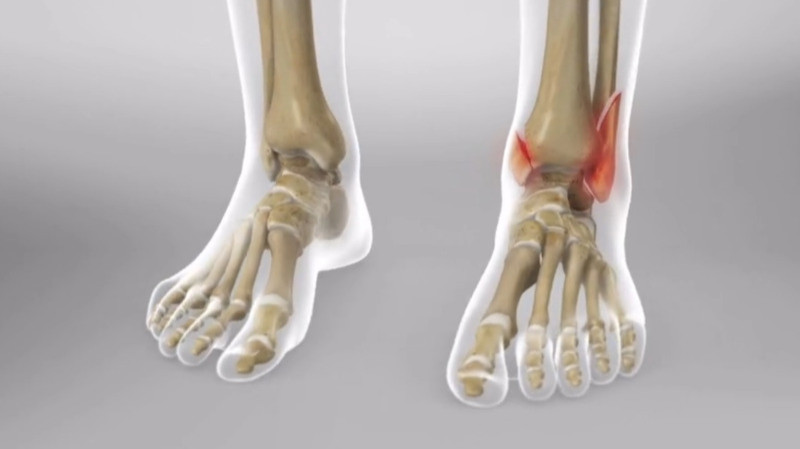
Understanding the anatomy of the ankle bone is necessary to deeply understand the treatment options. Basically, an ankle is made up of 3 main bones. The first one is the tibia, commonly called the sin bone. The second bone is the outer lower leg bone (fibula). Finally, the third bone is the one that connects the leg to the foot and is called Talus. Any of these three bones can break or crack during an ankle fracture. That is why a fracture can be a minor or major fracture.
After an ankle fracture, the focus of treatment is to provide stability to the ankle and correct the bone damage. Improper treatment can lead to long-term complications of the ankle bones. Common causes of ankle Bond fracture are slipping or falling, injury from playing sports, sudden road accidents, severe twisting of the ankle, etc. The symptoms include severe pain in the ankle, swelling, and redness. Moreover, the patient is unable to put weight on the ankle, and in some cases, when the ankle fracture is severe, a visible deformity appears.
Conservative treatment for ankle fracture means that those treatment methods that do not involve surgery. These are also called non-surgical treatment methods for ankle fractures. Best orthopedic surgeons use these methods when the condition is stable and involves minor factors. In such types of ankle fractures, the bones do not move out of their place, meaning they are not displaced. Conservative treatments include the following methods:
These methods of ankle fracture treatment take a few weeks, and the body naturally heals the fracture. Major benefits of this treatment method are no risk of infection, no complications of anesthesia, etc.
However, if the fracture is not treated by a proper Orthopaedic doctor, then there are high chances of the bone healing in the wrong position. This can cause permanent stiffness of the joint and limit mobility. There is also a risk of early ankle arthritis in case of malunion of the ankle joints.
Ankle Fracture Surgery is a non-conservative method of treatment for ankle bone fractures. It works well when the ankle bone is severely unstable. In the majority of cases, the bones of the ankle have been misaligned or shifted from their original place.
During this type of treatment method, the surgeons make an incision in the ankle and realign the bones. This procedure may also involve the use of metal plates, screws, or rods to hold the bones in their place. The most common procedure is called Open Reduction and Internal Fixation (ORIF). After the ankle is stabilized, it is left for proper healing.
Even during the healing process, the bone can be moved up to an extent. It significantly reduces the risks of improper healing of the ankle bone. The joint of the ankle becomes stable soon. Ankle Bone Fracture Surgery is best for individuals who are active and for athletes.
Rare but possible risks could be
Restoring pain free movements is practical: Meet Dr Ahmed Shoaib for safe and precise surgery
The choice between surgery and non-surgical treatment depends on the severity of the fracture and patient factors. The table below provides a simple comparison of the treatment options for ankle fracture surgery.
| Feature | Conservative (Cast/Boot) | Ankle Fracture Surgery (ORIF) |
|---|---|---|
| Best for | Stable, non-displaced fractures; some patients with high surgical risk or low physical demand. | Unstable, displaced fractures; younger, active patients; bimalleolar/trimalleolar fractures |
| Recovery Timeline | 6–8 weeks of immobilization. Longer period of strict immobilization; recovery of motion and strength takes significant time. | 8–12 weeks (often earlier movement), Structured rehab; may allow earlier motion, but full recovery can take 3-6+ months |
| Risk of Infection | Nearly Zero | Low (but present) blood clots may form in some cases. |
| Alignment Accuracy | Natural (may shift) | Precision-guided by hardware |
| Hospital Stay | Usually not required | 1–2 days in some cases |
| Pain Management | Initial discomfort in the cast | Post-op pain followed by stability |
| Long-term Arthritis | Higher risk if alignment is off | Lower risk due to exact alignment |
| Hardware | None | Plates and screws (Internal) |
| Long-Term Stability | May be limited in severe fractures | Usually, better joint alignment |
Choosing the best treatment among ankle bone fracture surgery vs conservative treatment is simple if you keep all relevant factors in mind. Conservative treatments are best when the fracture is minor. However, surgery is best when the structure is severe and requires internal alignment. Both of the treatment methods are safer and aim to stabilize the ankle bone.
It’s always best to let experienced ankle fracture treatment surgeons choose the right approach after a complete evaluation of the fracture. For example, if a patient had a fracture due to climbing the stairs and the pain is severe, the doctor may recommend imaging to see the inside of the ankle bone. After evaluation, if the fracture is unstable or displaced, then surgery will be recommended for such a patient. So, consultation with an Orthopedic surgeon and proper evaluation of the ankle fracture matter a lot.
In the end, Anklebone fracture surgery Vs conservative treatment may confuse many when it comes to picking the one. Both are safe options and offer reliable outcomes. However, the decision to choose between these two depends on the type of fracture, patients age and overall general health. If the fractures of the ankle are stable, then it is quite easy to heal them with conservative treatments. But if the fractures are complex and severe, then surgery is a safer option for the majority.
Patients simply should not choose to take the easy route, and instead, should focus on lasting joint health. The first and most important step after an ankle fracture is to diagnose the condition properly. Surgeons like Dr. Ahmed Shoaib at Orthocenter, with his dedication, strong educational background and extensive training, can suggest the best for his patients. With a proper treatment plan, it is quite easy to recover and lead a normal life.
WhatsApp Us
