Welcome to Our Orthopedic Clinic in Pakistan!

The pain in the hands or wrists can badly interfere with your daily chores. You may feel this pain when doing even the simplest activity, e.g., typing, pulling, cooking, and sleeping.
Did you know? Arthritis and carpal tunnel syndrome are considered to be the two common culprits.
Moreover, these are similar but have different causes of their symptoms as well as treatment patterns. Finding out those differences will enable you to select the appropriate care and maintain the hand and wrist functions in the long term.
This post explains the two conditions in easy terms, such that you know the symptoms and visit an Orthopedic surgeon when the need arises.
At Orthocenter, our Carpal Tunnel surgeon, Dr Ahmed Shoaib, combines orthopedic excellence with the latest technology to make you move again, lessen pain and recover your quality of life. Our expert designs unique bone, joint, and muscle treatment protocols, ensuring every patient receives care with compassion and accuracy.
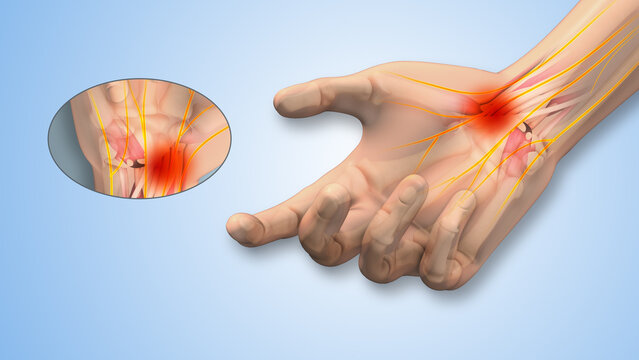
Carpal tunnel syndrome is a pain that results when the median nerve is compressed on its passage through the wrist tunnel. Basically, when the nerve is squeezed, it brings tingling, numbness, or weakness in one or both hands.
Repeat use of the hands, typing, clinging, inflammatory traumas, variations in hormones, illnesses, e.g., diabetes or thyroid diseases, may trigger this condition.
Furthermore, these symptoms tend to have a gradual onset. Usually, patients say they experience a pin-prick feeling or numbness in the thumb, index finger, middle finger, and part of the ring finger.
Such sensations frequently get exaggerated during the night. Aging can also lead to a decrease in grip strength, and thus it becomes difficult to hold an object or to perform fine tasks.
Arthritis affects the joints. Osteoarthritis, rheumatoid arthritis, and post-traumatic arthritis may all be present in the hand and wrist. In contrast to carpal tunnel syndrome, which involves a nerve, arthritis destroys the joints where bones interconnect.
Arthritis causes people to experience deep and painful sensations, which are sometimes chronic. Commonly found are morning stiffness, swelling, warmth, or limited movement. There are joints that get bumped, deformed or gritty to touch. In contrast to tingling or numbness, arthritis pain remains inside the joint of the body and remains constant.
It may be difficult to distinguish between nerve pain and joint pain; however, there are clear indications. The symptoms of carpal tunnel have a median nerve pattern. These symptoms include numbness and tingling in the thumb, index, middle and some part of the ring finger; the pangs frequently increase at night or following accomplishment of daily duties. Shaking softly will help in the short run.
The symptoms of arthritis are not the same. No tingling or numbness. Focused on joints (wrist, knuckles, or thumb base) which are commonly accompanied by stiffness, swelling or heat, particularly in the morning or following idleness. There can be a sense of being limited in movement, and joints may appear distended or distorted.
To treat the condition, an adequate diagnosis is necessary. To identify the source, orthopedics employ physical examination and special tests.
In the case of carpal tunnel, symptoms can be reproduced by flexion or tapping of the median nerve over the wrist, with the possible addition of nerve conduction studies or ultrasound.
In Arthritis, X-rays will show the damage to the joints or cartilage loss. Moreover, blood tests exclude rheumatoid arthritis. Swelling, stiffness, and mobility patterns are checked to diagnose it.
The difference in the treatment plans is due to the difference in the underlying problems. Wrist splints, lifestyle changes, anti-inflammatory medications, or local injections help carpal tunnel to improve. When the symptoms become worse or are not improved, nerve pressure can be decreased by means of minimum invasive surgery and function restored.
The goal of arthritis treatment is to manage inflammation, maintain joint movement, and delay the damage. Options include medication, hand therapy, heat or cold packs, braces, and exercises that do not impose any strain on the joint. Arthroscopic Surgery may be advised in more advanced cases when it is clear that the damage is severe, including joint reconstruction or fusion.
Seek a specialist when hand/wrist pain disrupts your life or goes on for several weeks. If you experience any of the following symptoms, you may need to get evaluated as soon as possible: It includes long-lasting numbness and pain at night.
Moreover, you may feel swelling in joints. Loss of grip and strength is also a sign. People report that they have difficulty doing daily chores.
The correct course of action at the right time will help in fighting the problem effectively.
Sometimes, both these wrist pains feel the same. However, the cause and pattern are very different. Stiff joints and arm twitch are usually due to arthritis.
Carpal tunnel syndrome is caused due to nerve compression, and arthritis is caused due to inflammation or damage to the joints. Knowing the differences will ensure faster and quicker relief with the right treatment.
The skilled orthopedic professionals can accurately diagnose and personalize treatments for inclusion.
So no matter if your symptoms are due to nerve compression, joint inflammation, or a combination of both, get professional help to become comfortable and strong and confident in your mobility again.
If you have severe hand or wrist pain, our expert orthopedic surgeon at Orthocenter can help! Either a sport-related injury, chronic pain or rehabilitation after surgery, Dr Ahmed Shoaib will take you through every phase of the healing process so you can live your life pain-free again.
Give us a call today and book your appointment for a complete evaluation.
WhatsApp Us
