Welcome to Our Orthopedic Clinic in Pakistan!
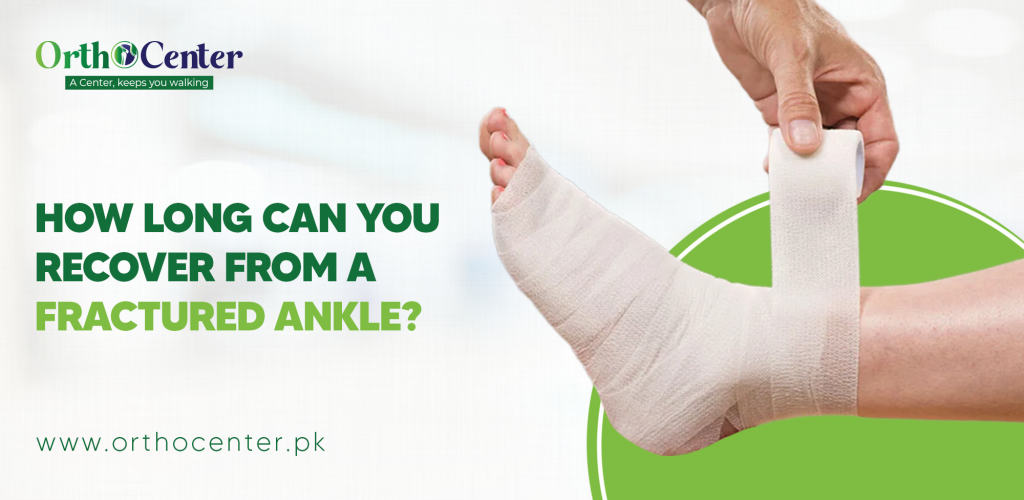
The process of ankle surgery is something that must be post-planned to recover. Physiotherapy becomes the focus since it helps to regain strength, flexing and balance following a fracture or surgery on the ligament.
Unless it receives guided rehabilitation, the ankle may become stiff, weak, and unstable. This is due to the fact that early intervention minimizes long-term complications and facilitates a quicker broken ankle recovery time.
Rehabilitation typically proceeds and passes through well-regulated stages, which are meant to safeguard the healing tissues as well as enhance mobility and functioning.

An ankle fracture can occur when one or more bones in your ankle joint shatter. However, the additives of the ankle joint are your talus, fibula, and tibia. The tibia is the large bone often known as the shinbone in the lower leg, and the fibula is a smaller, thinner bone. The bottom extremities of your tibia and fibula converge and butt up against your talus. Your talus is the main connector between your leg and your foot.
It is possible to shatter more than one ankle joint bone at once. Thus, the more bones you wreck, the more severe the damage. Serious fractures require ankle surgical treatment. A broken ankle might heal from a few weeks to two years.
The initial period starts during the first few days or weeks of ankle fracture surgery. The main objective would be to protect the ankle at this stage, which is still exposed. Therapists emphasize smooth, gentle exercises that do not limit motion. This allows the elimination of stiffening of the joint and swelling.
Patients also get to know how to use aids like crutches, walkers, or a walking boot. Gait training at this stage is essential, as it will minimize unwarranted pressure on the healing bone and avoid a compensatory pattern that can delay recovery.
There are also elevation, icing, and safe weight instructions in this stage which are under the recommendations of the surgeon. The combination of these steps forms a stable framework of the next steps of rehabilitation.
Patients who have undergone surgery slowly transition to the strengthening stage once the surgeon shows that he or she is well. The focus in this stage changes to the re-building of muscles that are used to support the ankle and the lower leg.
The most popular ones are the muscle groups related to the calf, the peroneal group, tibialis anterior, or even hip stabilizers, which all help to achieve the right walking mechanics.
Physiotherapists present the progressive resistance exercises, closed-chain movements as well as controlled weight-bearing tasks. Every exercise is chosen so as to help restore stability without exerting too much stress to the healing structures.
With increased strength, patients observe increased balance, better walking behaviors, and less fatigue during daily functioning. This step is necessary to condition the ankle to undergo the functional activities like walking long distances, body weight shifting and stair climbing.
During the last stage, the emphasis switches to the advanced training of balance and proprioception. The exercises will consist of the single-leg stance exercises, dynamic balance exercises and agility-based exercises. These exercises recondition the nerves and muscles to respond fast and in a proper manner when performing daily activities minimizing the chances of re-injury.
Sport-specific rehabilitation is implemented for athletes or active persons. This can be in the form of jumping, directional changes that are controlled or a gradual buildup of training loads. Functional testing, strength testing, as well as confidence and safety of the patient, guide Return-to-sport rather than timelines.
The following factors can also affect how quickly you get over an ankle fracture:
An effortless, non-displaced fracture will heal faster than a complicated, displaced fracture that desires to be dealt with by a medical doctor.
In standard, younger humans heal more quickly than older adults. The speed at which the body heals depends on bone density and general health.
Chronic conditions consisting of diabetes, osteoporosis, or autoimmune disorders can sluggish down the healing method. Additionally, smoking is understood to slow bone healing due to reduced blood flow to the injured place.
Following the recommendation of your doctor, attending physical therapy periods, and avoiding activities that might stress the repaired ankle is vital for easy healing.
Surgical repairs may have a longer recovery duration but are often necessary for intense fractures. Non-surgical treatments, including casting, may additionally lead to quicker restoration for minor fractures.
Close correlations between physiotherapists and orthopaedic surgeons are vital in achieving a successful recovery. The surgeon sets structural safety thresholds for weight-bearing status, healing progress, and any measures, depending on the type of surgery. The physiotherapist would then create a rehabilitation plan within those limits.
The follow-up appointments are frequent, which allows the patient to successfully go through all the stages and to detect possible complications in time. The integrated strategy is healthy both in the long run with respect to joint health and is accompanied by a smoother, faster functional recovery.
Let’s unfold how Just Walk improves the recovery of ankle surgery.
Just Walk by Orthocenter
Just Walk is a progressive and wearable-assisted gait device that enhances post-surgery recovery in ankle fracture surgeries. It conditions neuromotor pathways, and it facilitates the practice of controlled gait in the course of rehabilitation.
The system provides patients with functional movements that can be performed comfortably and safely, as opposed to the standard walking exercises, where the patients must be supervised and monitored to ensure they adopt the correct non-gymnastic movements and indeed with changeable resistance levels.
Repetition, real-time feedback, and supervised therapy are combined in the technology in a manner that is proven to increase the quality and speed of recovery.
The main benefits of Just Walk by Orthocenter are that it can be adjusted to meet the unique needs of the patient. Depending on mobility, pain levels, and healing rates, the therapists can make changes to the level of resistance, monitor progress, and the intensity of exercises. This makes recovery safe, progressive and according to the objectives of the patient.
Just Walk enables therapists to be able to track the gait patterns, the number of steps, and aspects of mobility as usefully as possible. Asymmetry or weakness can be detected in real-time so that they can be corrected early. Following these measurements, the process of rehabilitation becomes quantifiable, allowing the clinician to adjust programs based on actual improvement rather than random experimentation.
The most important postoperative intervention is gait training, which is necessary particularly among patients who have problems with limping, lack of balance or weight-bearing phobia. Just Walk teaches repeated, regulated walking exercises- forward, sideways, walking up a staircase, etc- and enables the patient to feel confident within a short period of time. Repeated, facilitated exercises lead to quicker neuromuscular conditioning, which substantially reduces the functional recovery period.
After my ankle surgery, I felt scared to put weight on my foot. Just Walk changed that within a few sessions. The guided steps and controlled resistance helped me walk confidently again. I could finally feel my balance improving, and the fear slowly disappeared.

I had been doing regular physiotherapy for weeks but still limped. When my therapist introduced Just Walk, the change was immediate. The system corrected my gait, and I saw measurable improvements in my walking speed. I was back to my daily routines much earlier than I expected.
My fracture required extensive surgery, and I thought recovery would take forever. The structured sessions with Just Walk helped me build strength without overloading my ankle. The progress tracking kept me motivated, and within a few weeks, I noticed real stability returning.
Traditional physiotherapy utilizes manual guidance, therapist cues, and home exercises. It works, but unfortunately, low repetition and inconsistent execution outside of therapy do not maximize the effectiveness of such a treatment.
Hence, Just Walk wins on this by providing high-dose, repeatable and task-specific supervised gait practice. However, the use of devices must conform with the guidelines of the surgeon regarding weight bearing, and only under the guidance of trained physiotherapists. Thus, with proper integration, Just Walk increases efficiency, enabling more accurate and faster functional gains than rehab alone.
A personalized program, therapist monitoring, and mobility tracking collaborate to help patients return to daily life with greater self-assurance. Just Walk reduces fear, builds muscle memory, and leads to a safer, faster ankle fracture recovery after surgery. Refining gait at an early age and maintaining the gait also leads to general ease of healing of the ankle.
Never ignore the symptoms of recovery. Persistent pain, increasing swelling, or new numbness and tingling may indicate problems including infection, nerve damage, hardware irritation, or delayed bone healing. A color change of the toes or lack of feeling requires immediate medical attention. Early evaluation prevents complications and protects long term recovery.
Post-Operative Visit allows your orthopedic surgeon to evaluate bone healing using exams and X-rays. These appointments educate you on when it is safe to put weight on, adjust your rehab plan or progress to the next phase of physiotherapy. Long-term monitoring has also been used to ensure proper alignment of the ankle, as well as proper healing of the cartilage, ligaments, and tendons.
Skipping follow-ups increases the risk of stiffness, chronic pain and delayed return to activity. This puts you behind in your full recovery time.
Recovering from ankle surgery requires the supervision of a progressive rehab schedule by expert orthopaedic and physiotherapy teams. Modern rehab technology, such as Just Walk by Orthocenter, can accelerate functional development and restore confidence when used under the supervision of a professional. With consistent follow-up, guided therapy and careful monitoring, patients have a smoother and faster ankle healing.
WhatsApp Us
