Welcome to Our Orthopedic Clinic in Pakistan!
Moving freely without pain or discomfort is a blessing. However, people do not realize the significance of independent mobility till they face a hurdle to it. Severe knee pain could be one of these obstructions. It can make walking, climbing stairs, or standing and other daily tasks extremely difficult. Various health problems, injuries, and even age can cause a gradual deterioration of the knee joint. Eventually making individuals suffer from pain, stiffness, and decreased mobility. In instances where medication or physical therapy no longer works, knee replacement surgery emerges as the most reliable solution to the problem.
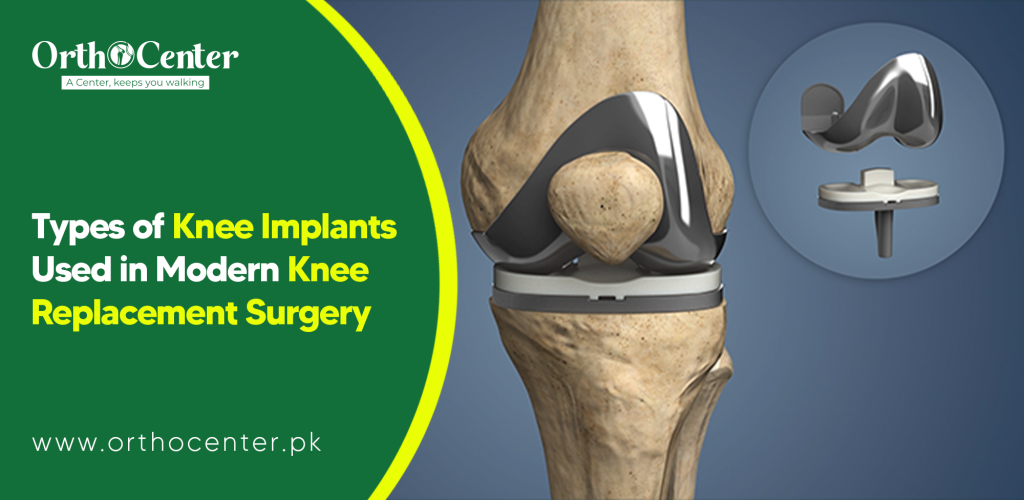
The modern knee replacement surgery involves replacing the damaged segment of the knee joint with artificial parts, the “knee implants”. With the advancement of modern technology, various types of knee implants have been developed to fulfill specific purposes or requirements.
Choosing among these could be difficult without comprehensive medical knowledge. But accomplished surgeons like Dr. Ahmed Shoaib play an important role in making the right decision. With comprehensive clinical judgment and vast experience, he guides his patients about the implants and surgical techniques, based on the requirements, structure, and lifestyle of the patient.
This article is meant to deliver an understanding of the types of knee implants used in modern knee replacement surgery to let you pick the best in order to have lasting relief and mobility.
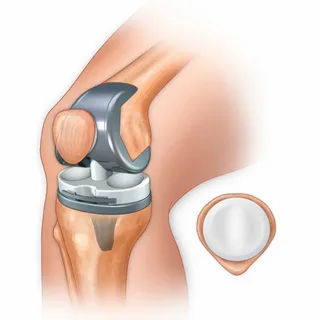
A knee implant is basically an artificial device that is designed to replace the damaged parts of the knee joint. Surgeons remove the worn-out cartilage and bone of the knee and place the implants there. These implants are designed in such a way that they mimic the natural movement of the knee. The bone glides smoothly without any friction, and the pain and swelling no longer stay. Moreover, these implants are made from strong and safe materials so that they last long and our body accepts them easily. They can perfectly work for 15 to 25 years or even more than that in the majority of cases.
There are different types of knee implants, which are categorized on different bases. Surgeons select these artificial joints according to the patient’s age, bone condition, lifestyle, and severity of joint damage. Modern knee implants are highly durable and even specialized for patients (custom-made). The techniques used to insert the implant in the knee have also been modernized. Robot-assisted surgery and minimally invasive surgical techniques have improved the outcomes and sped up the recovery process. Some major categories of knee implants are mentioned below:
Surgeons use these implants when all three compartments of the knee joint (medial, lateral, and patellofemoral) need replacement. Their further division is as follows.
These implants work well when only a specific damaged portion of the knee needs replacement. Main types are
These traditional types of implants use bone cement. The components are usually fixed using a strong acrylic adhesive called bone cement, in simple terms. With Cemented Knee Implants, the implant is securely fixed in place to provide strong stability for the joint. This option is often considered highly reliable and beneficial, especially for older patients who require dependable knee support.
. Those with weak bone quality are also good candidates for cemented knee implants.
These implants have a rough and porous surface, and the bone can grow into it. The idea behind these is that after their placement, the bone will grow, and over time, these implants will become a permanent part of the bone. These are more beneficial for active and younger patients because these patients’ bones have a tendency to grow. Their success rate is very high.
Sometimes, the surgeon uses a combination of both implants to provide the best results. A cemented implant is used for the shin bone, while a cementless implant is placed on the femoral side of the knee to increase bone growth around it.
These are the most common types of knee implant design. The plastic spacer is locked to the metal tibial component. They provide stable movements and successful results. These implants are incredibly durable, which is why they are a gold standard for many patients.
In these implants, the plastic spacer rotates. These are preferable for patients of a young age, and they allow an increased range of motion. The rotation of the knee joint becomes more natural, and the “wear and tear” significantly reduces. The implants move along with the joint when the patient bends or rotates. So, greater flexibility is available.
Break the barriers limiting your mobility: Meet Dr. Ahmed Shoaib for safe, precise and modern joint replacement
There is another way to categorize Implants. It is based on the materials used to make them. The most common material used for implants is metal, ceramic, or a high-grade plastic. All these materials of the knee implants are always biocompatible. This means that the human body accepts them easily, and there is no reaction or rejection of these implants. These materials can easily handle body weight. They can also bear constant movement and last for years. The table below briefly tells about the materials of the implants, with their purpose and benefits.
| Implant Material | Purpose | Benefits |
|---|---|---|
| Cobalt-Chromium Alloy | Metal component of the implant | Strong, tough, and wear-resistant. Does not corrode. |
| Titanium Alloy | Implant base structure (used for the parts that touch the natural bone of the patient). Bone can grow in it. | Lightweight and biocompatible. It is bone-friendly. |
| Polyethylene Plastic | A cushion between metal parts, treated with radiation to be resistant. | Smooth movement and shock absorption, long-lasting. |
| Ceramic | Advanced implant material | Reduced wear and longer lifespan |
| Oxidized Zirconium | High-performance implant surface material, specialized metal-ceramic alloy. | Extremely durable, highly wear-resistant, and smoother movement with reduced risk of metal allergy. |
In summary, modern surgical procedures have revolutionized joint replacements. One of these advances is the upgradation of implants. Talking about knee replacement surgery, there are different types of knee implants. Knee Replacement Surgeons carefully select implants designed to match the specific needs of each patient and the extent of damage to the knee joint.. Knee replacement surgery can do wonders if the right implant is your choice. Presently, advanced implants are stronger, safer, and more natural in movement than ever before.
The experience and knowledge of the surgeon also matter for a successful implant placement. Orthocenter by Dr. Ahmed Shoaib is a leading bone and joint care center that provides safe and successful knee replacement surgery to patients. With the provision of advanced procedures and high-quality, durable implants, patients receive lasting outcomes. Thus, by picking the right expert care and a good quality implant, you can restore your freedom to move independently.
WhatsApp Us
