Welcome to Our Orthopedic Clinic in Pakistan!
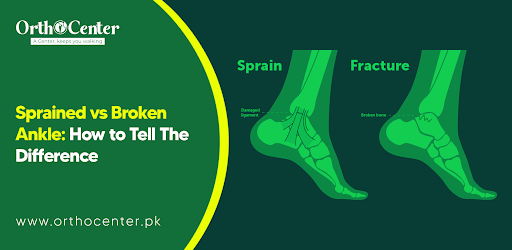
A single misstep could turn a regular day into a hard one. It doesn’t matter whether it occurs while you are running after your kid, jogging in the morning, or taking one step on the staircase; the ankle damage may completely disrupt the usual flow of things. The most common concern that arises under the circumstances of swelling and pain is this: Am I merely dealing with a sprain, or does my ankle bone break?
As both conditions share symptoms such as pain and swelling, it can be difficult to tell them apart. However, recognizing the key differences between a sprain and an Ankle Bone Fracture is essential, as an accurate diagnosis can significantly influence treatment decisions, recovery time, and overall outcomes.
Dr Ahmed Shoaib at Orthocenter has gained an exceptional reputation in the field of orthopaedics due to his clinical insight and competency. His patients prefer him for the individualized care and provision of advanced procedures.
This writing will further elaborate on sprained vs broken ankle to enable you to judge the right course of action and prevent complications.

Ankle sprain is one of the most widespread types of musculoskeletal injuries. These can happen to anyone at any age or physical condition. Regardless of whether it is caused by an accident, exercise, or just by taking a wrong step, an ankle sprain results in pain and difficulty walking due to swelling in the area. Severity may differ from a slight stretching of ligaments to a complete rupture. Hence, the need for a proper examination and treatment is a must.
An ankle sprain refers to the damage done to the ligaments that hold the ankle bones together. Ligaments are dense and flexible tissues that are responsible for joining bone structures and ensuring joint stability. The majority of cases of an ankle sprain are caused by an unnatural inversion of the foot. In consequence, it results in the overload of the ligaments on the outside of the ankle joint.
Symptoms vary according to the level of damage done to the ligaments. Some typical symptoms include:
In case of mild sprains, walking may be possible but not easy, whereas with severe sprains, bearing weight may become very difficult.
An injury referred to as a broken ankle is a situation where one or more bones in the ankle joint are fractured. The three main bones making up the ankle include:
Tibia – shin bone
Fibula – smaller leg bone
Talus – bone attaching the leg to the foot
These fractures can vary in intensity. There could be minor cracks or serious fractures (involving all the bones) interfering with joint stability.
In other instances, the bone may penetrate through the skin, which becomes an urgent condition.
| Feature | Sprained ankle | Broken ankle |
|---|---|---|
| Pain Location | Concentrates around the ligaments, often on the outside | Felt directly in the bone inwardly |
| Ability to walk | Possible to walk in majority cases, however, it will be painful | Extremely difficult or impossible |
| Swelling and bruising | Depends on the severity of the damage | Depends on the severity of the damage |
| Deformity | Fewer or no chances | Visible, and sometimes you can see bone out of the skin |
| Tenderness | Mild over the ligaments | Sharp and directly over the bone |
If you encounter one or more of the following issues, you need to visit your doctor.
Early diagnosis will lead to timely and proper treatment.
Consulting best orthopedic surgeons ensures timely diagnosis and treatment, helping prevent complications that may arise from delays and improving the chances of a successful recovery.
The first step that a physician would take would involve performing a physical exam and evaluating your symptoms.
The physician may examine:
As part of diagnosing this condition, a physician may need:
X-rays: X-rays are the most commonly performed test that helps detect and evaluate fracture injuries.
MRI Scan: If there is suspicion of ligament injury, an MRI scan may be required even if the X-rays were normal.
CT Scan: CT scans offer more detailed pictures and can be used if the injury requires surgery.
Get Personalized Care and Advanced Procedures At Orthocenter for Your Ankle Fracture Before It's Too Late
Meet Dr Ahmed Shoaib To Get Specialized Care To Make Every Step Pain-Free
| Sprained ankle | Broken ankle | |
|---|---|---|
| Mild to Moderate |
Rest Compression Icing Elevation |
Immobilization in a cast or boot Limited weight bearing Follow-up imaging Medication |
| Severe |
Walking boots Bracing Physical therapy Temporary use of crutches | Surgery focusing on the insertion of metal plates, screws or pins |
| Sprained ankle | Broken ankle |
|---|---|
|
Mild sprain: 1–3 weeks Moderate sprain: 3–6 weeks Severe sprain: Several months |
Minor fracture: 6–8 weeks Surgical fracture repair: 3–6 months or longer Returning to sports or strenuous activity too soon can increase the risk of reinjury. |
Injuries cannot always be prevented, but there are many ways to reduce your chances. Proper prevention and timely care are essential, as untreated ankle fractures may lead to chronic pain, joint instability, and other long-term problems.
In the concluding arguments, the discussion of ankle injuries, a sprained vs broken ankle, is a major topic. The symptoms associated with these two conditions are similar in nature, such as pain, swelling, discoloration, and limping. But the body components they affect are entirely different. While a sprain results in an injury of the ligaments that hold the ankle together, a break indicates damage to one or more bones.
Since symptoms such as not being able to walk match in both cases, it will probably be quite hard to distinguish between them without the assistance of an expert. When you are confused about which problem you have, it will be better for you to visit a doctor.
When it comes to orthopedic care, choosing the right specialist can make a significant difference in your recovery journey. Dr. Ahmed Shoaib is recognized among the top ankle fracture treatment surgeons for his compassionate approach, sound clinical judgment, and commitment to delivering timely and effective care.
As one of the experienced orthopedic surgeon, he is highly regarded by patients for his surgical expertise, medical knowledge, and the respect, professionalism, and personalized attention he provides throughout the treatment journey.
Seeking expert evaluation at the right time can help prevent complications, accelerate recovery, and improve long-term outcomes. If you are experiencing joint pain, a sports injury, or any orthopedic concern, consulting Dr. Ahmed Shoaib could be the first step toward restoring your mobility and quality of life.
WhatsApp Us
