Welcome to Our Orthopedic Clinic in Pakistan!
Bone cancer is a serious disease that is rare and arises when the abnormal cells start to grow out of control in the bone tissue, thus affecting the normal bone structure and functioning. It can either begin directly in the bone, which is called primary bone cancer, or it can also develop when the cancer of another organ, like the breast, lungs, or prostate, spreads to the bones, which is called secondary or metastatic bone cancer.
Since bones are considered an essential part of the movement, organ protection, and blood cell production, the occurrence of cancer may cause pain and weakness and predispose the patient to fractures. Bone cancer is not very common, but it must be treated directly and in time because, during its early diagnosis, it is possible to treat this illness much better and to achieve better results.
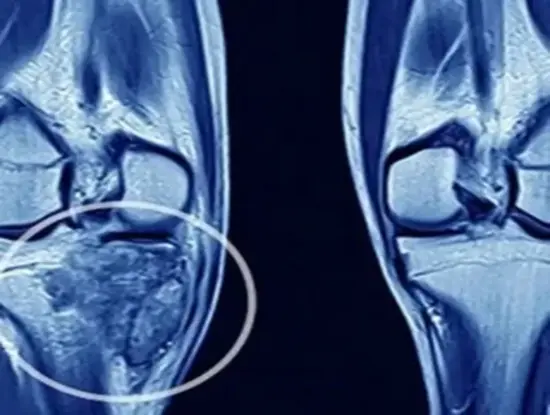
Bone cancer usually results in constant pain in the bone involved, which worsens with time. It’s also unlike pain that arises from injury: it will start mild and infrequent compared to those unrelated to traumas, after which it will become increasingly severe and more constant. Some patients complain of pain that worsens at night or during any sort of activity, while most claim they enjoy little relief through rest.
The danger of this particular symptom is that, initially, younger individuals might find it as just another of their common growing pains, while older ones would dismiss it as merely arthritis. However, if it continues unabated for more than two weeks without other obvious causes, it is time to seek a physician’s opinion. Orthopedic oncologists emphasize the need for early X-rays or MRI to investigate any possible bone pain. The diagnosis can quickly confirm whether the pain is from cancer or not so that you can start timely intervention if necessary, with all the advanced capabilities available at bone cancer treatment centers.
Most often, as the bone tumors develop and progress, they tend to give rise to noticeable swellings or to hard lumps that can be palpated adjacent to the affected bone. Such growths may be tender to the touch, and sometimes they produce red, warm skin on top of them, indicating infection. An even greater source of possible worry is lumps along long bones and adjacent to joints, but without any history of trauma or injury.
What differentiates them from benign lumps is the dependence of malignant phenomena on their persistence and progressive increase over the weeks. Not like temporary swelling due to minor injuries, these formations fail to subside with time or with standard anti-inflammatories. Specialists of treatment facilities for bone cancer recommend that in case of any unexplained lump near a bone, especially if it is painful, imaging studies should be done on an immediate basis, followed, if required, by biopsy. Early detection of such growths greatly improves the chances of success for subsequent bone cancer treatment, which may comprise surgical removal, radiation therapy, or otherwise targeted interventions
Severe, non-traumatic fractures are truly alarming sights for the diagnosis of bone cancers. As a result of these cancerous lesions weakening the bone architecture, any patient may break a bone in the context of relatively harmless daily activities. A pathologic fracture is, therefore, almost always a sign of an advanced underlying bone cancer, particularly in cases where other signs and symptoms may have been mild or even missed altogether.
Pathologic fractures from bone cancer tend to heal poorly without proper treatment of the underlying condition. Orthopedic surgeons deal with bone cancer patients daily with atypical fractures as the first meaningful complaint. This often leads to a diagnosis of cancer. Current treatment practices found in cancer care centers can repair the fracture itself through surgical stabilization. Thus, providing comprehensive care for the cancerous lesion, including limb-sparing measures that allow for the preservation of function along with tumor removal.
Fatigue and weight loss are nonspecific symptoms that can occur with most diseases. However, all the bone-related symptoms, should induce a sense of caution toward the indication of possible bone cancer. The malignancy places a very high metabolic load on the normal body. Also, the cancer cells use up a lot of energy from rapid action-giving rise to extreme fatigue. Unwanted weight loss of 10 pounds and above, desertion of all possible dietary changes and increased exercise regimen is bad news when present with bone pain or any other local symptoms.
These oncologists think that systemic symptoms are an important indicator of progress of the disease. The bone cancer treatment programs address these detrimental systemic effects. These treatment plans include support for nutrition and metabolic management with primary cancer therapies. Patients experiencing these along with any of the other warning signs of bone cancer must undergo evaluation without delay. This is because early intervention can tremendously improve the quality of life and treatment outcome.
Any progressive stiffness in the joints with a decrease in mobility can be an early indicator of bone cancer. Especially in cases where the tumor develops around the joints, i.e., knees, hips, or shoulders. Stiffness due to cancer develops and rapidly worsens over several weeks instead of the gradual onset in arthritis. Thus, in these cases, everyday acts like walking or bending become increasingly hard. In such conditions, patients report their joints being “locked” or give atypical grating sounds.
It’s not possible to treat this condition with rest or pain medications. So, when you start experiencing these mobility issues without any injury or surpass normal recovery times of the ankle, immediately visit your Surgeon. Orthopedic Surgeons will evaluate your condition and refer you to a bone cancer treatment center. There are imaging techniques to detect the tumor while it is in earlier stages.
Hence, early diagnosis becomes all the more important. This is because modern bone cancer treatment will provide options for better outcomes regarding joint function. In specialized limb-sparing surgeries and precise radiation therapies currently available, tumor cells may be removed. These advanced treatments also shrink the tumor while ensuring that joint function is preserved. Many patients treated on time at cancer centers regain almost complete mobility.
This is due to combinations of targeted physical therapy with these advanced interventions. On the other hand, ignoring persistent joint stiffness may allow tumors to develop with little hindrance, resulting in larger-scale surgeries. Therefore, immediate medical consultation is required for any loss of joint function.
If bone tumors form near major nerves or within the spinal canal, then patients may have many signs. These signs include numbness, tingling, or even weakness of muscle function in the affected areas. These neurological symptoms result from the tumor enlargements compressing substances. Thus, it impairs the nerve function. This condition is quite severe in spinal bone tumors. It is because if you neglect the immediate intervention of nerve compression, you may develop bowel or bladder dysfunction.
It is necessary to initiate an evaluation if patients report having these symptoms. Bone cancer treatment for nerve-involving tumors may include radio-surgical approaches or minimally invasive surgical procedures. These treatments decompress affected nerves and treat the underlying cancer. Patients should keep an eye on these signs and treat the symptoms as soon as possible. It will decrease the risk of permanent nerve damage. Also, it will be possible to preserve the maximum degree of function.
Some patients experience systemic symptoms such as low-grade fevers and drenching night sweats. Usually these symptoms manifest in cases of aggressive bone tumors like osteosarcoma or Ewing sarcoma. Mostly occurring when the person mounts an immune response against the cancer cells and releases inflammatory substances. Fever means many things. But it usually should make a bone cancer-permissive state when combined with pain. Thus, it is continuous without any proof of infection.
Centers for bone cancer treatment in Lahore can evaluate these systemic symptoms through advanced diagnostic tests such as PET scans and molecular investigations. Cancer specialists adopt a multidisciplinary methodology so that they can investigate such systemic manifestations thoroughly. Once they properly investigate it’s easier to treat the primary bone tumor.
at Orthocenter from Dr Ahmed Shoaib, Before It’s Too Late
The importance of bone cancer symptoms early diagnosis is vital in the treatment and long-term positive outcomes. Treatment possibilities are wider and more effective when bone cancer is discovered at its initial stages.
It is also necessary to realize that the symptoms of bone cancer can be confused with non-cancerous and common diseases. Injuries, arthritis, or changes related to growth may cause pain, swelling or weakness. Nevertheless, chronic or progressive symptoms cannot be neglected.
Knowing the principal forms of bone cancer will put the symptoms in their proper perspective and will decrease needless anxiety.
Primary bone cancers occur directly in the bone. They may vary in structure and place where they affect, though they are few in number. The following are the types of some primary bone cancers;
The most prevalent primary bone cancer is osteosarcoma, which affects mostly teenagers and young adults. It normally occurs in long bones like the femur, tibia, or the upper arm, and it tends to be close to growth plates.
Ewing sarcoma is a disease that is common in children and young adults. It may occur within bones or in the soft tissues in the area, and it usually comes with pain and swelling, which can be confused with athletic injuries or infections.
Chondrosarcoma is a disease that usually develops in adults, and it has its origin in the cartilage cells. It is usually developed in the pelvis, rib cage, or shoulder, and its progression can be slow, thus very difficult to detect early.
Chordoma is an infrequent form of bone cancer that develops either at the skull base or the spine. The position can result in nerve-related problems as well as pain.
Metastatic or secondary bone cancer occurs when cancer cells have migrated to the bones due to the presence of another site of cancer in the body. Breast, prostate, and lung cancers are the most prevalent ones. In such instances, the cancer does not turn into a new bone cancer but retains the properties of the original tumor.
Metastatic bone cancer is much more common than primary bone cancer. Most of the patients with bone involvement are known to have an existing history of cancer in other parts of the body.
It is important to know about secondary bone cancer as the pain in the bones or the fracture can be a result of the spread of an already existing cancer and not a new bone tumor. It helps in the proper diagnosis, timely treatment planning, and realistic expectations in managing the condition.
Bone cancer is not very readily recognized at its early stages, as it is uncommon, and the symptoms are not specific. Most of the warning signs are very similar to common musculoskeletal conditions in children, like muscle strain, arthritis, or growing pains.
Pain or swelling that starts early is often discounted as minor and or transient, particularly when it passes with rest or pain-killing drugs. This delays bone cancer treatment until the symptoms become more severe.
It is important to note that the existence of a symptom does not imply an individual has cancer. Nevertheless, the chronically present symptoms, which increasingly get worse, or the presence of the symptoms together, are subject to medical consideration. Consciousness during this situation promotes prompt assessment without unneeded panic.
It is very beneficial to maintain a symptom diary. Record the time of pain and swelling, the progression of the pain and swelling over time, and whether it recovers with nighttime or with activity. Note any other symptoms like tiredness, loss of weight, or unexplained or low-grade fever.
Even mild pain should not be overlooked. In case the symptoms take more than two to four weeks, and they do not subside, a medical examination is needed.
Numerous benign disorders have similar symptoms to bone cancer. The only sure way of identifying the cause is by means of proper imaging and clinical assessment.
When suspicions arise, there is always an opportunity to consult qualified specialists, and it is necessary to involve orthopedic oncologists to identify the diagnosis and carry out the treatment in time.
The survival rates differ considerably based on the kind of bone cancer, the stage of its diagnosis, and responsiveness to treatment. Early diagnosis has a great effect.
With early diagnosis and proper treatment, the chances of survival are significantly greater. Further treatment might be more violent in advanced cases.
The grade of the tumor and its location determine prognosis. Less serious tumors tend to carry better prognoses, and those that are of high grade necessitate aggressive therapy.
The survival rates are closely related to the prompt detection and reaction to the chemotherapy. Localized disease is prognostically better than spread cases.
One should keep in mind that statistics mirror averages. The personal results are different according to the general health condition, access to treatment, and medical knowledge.
Bone cancer is not common, but it is a true and serious condition. The warning signs of bone cancers are similar to those of normal orthopedic issues, and this delays the diagnosis. Constant or progressive pain, swelling, or other changes, whose causes cannot be identified, should never be ignored, particularly when the symptoms are combined.
Being aware promotes early assessment without fear. Early consultation with the medical care provider will help make the correct diagnosis, treatment, and improve the results. The key to long-term bone health protection is awareness rather than panic.
Book a consultation at Orthocenter today for our expert Dr Ahmed Shoaib’s evaluation, accurate diagnosis, and personalized care because timely attention can make all the difference.
WhatsApp Us
